


CTO Uncovered’s View
Private equity and venture capital firms are not struggling to “understand AI.” They are struggling to stay ahead of compounding operational complexity: tighter regulation, more demanding LP expectations, and faster deal competition. Eric Hawkins, CTO of Ontra, sits directly in that pressure field. His core challenge is not shipping flashy features; it is building enterprise-grade AI workflows that can be trusted in high-stakes financial and legal environments, where being almost right is functionally wrong.

What makes Ontra an intriguing CTO Uncovered case study is that the AI conversation is not theoretical. In just a couple of years, Eric watched customers move from fear and resistance to a new expectation: “You’re not doing enough with AI. Where are you with agents?”
About Ontra
Ontra’s mission is to bring operational clarity to private markets by unlocking information trapped in unstructured data. Inside investment firms, critical truth lives in documents: agreements, side letters, files, folders, and charts. The information is there, but inaccessible. People do not always know what is in the documents, what they have committed to, or what those commitments require in day-to-day operations; the result is both risk and drag. Every decision can become a scavenger hunt for what is allowed, what is needed, and what cannot be missed.
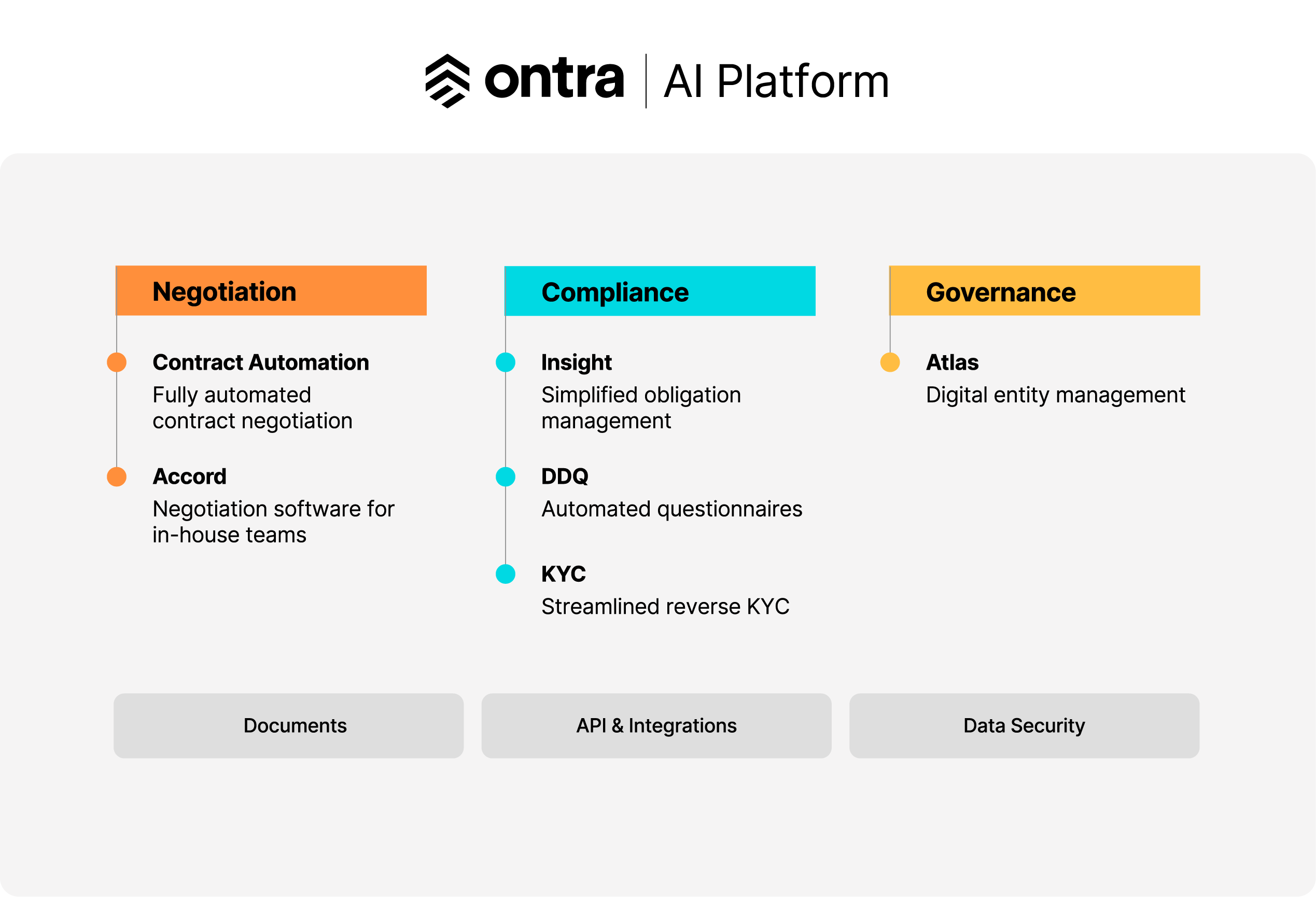
Ontra’s goal is to unlock that information so firms can move with more confidence and speed. Eric frames it as reducing risk, reducing operational friction, and delivering insight quickly, not through ad hoc search, but through systems that drive action. He also notes that Ontra looks across the full fund lifecycle, from early-stage deal room access and NDAs through fundraising and downstream obligations.
Key Takeaways
The Expectation Whiplash: In two and a half years, customers moved from “AI is too risky” to “why aren’t you doing more with AI?”
Vertical Workflows Beat Horizontal Tools: The value is not AI search. The value is end-to-end workflows that solve a whole business problem to completion.
Human-in-the-Loop is a Trust Strategy: AI can get you to high accuracy, but human expertise closes the last mile when correctness is non-negotiable.
Capture the Digital Exhaust: Review is not just quality control. It is a signal. The edits and corrections serve as ground truth, improving the system over time.
Build Now, Rebuild Often: Waiting for models, platforms, or agent frameworks to stabilize is a mistake. You learn by building, then you refactor as capabilities evolve.
The New Full Stack Team: High-performing AI product teams need application engineers fused with ML rigor, not an ML group operating separately in notebooks.
Meet Eric Hawkins
The Journey to the CTO Seat: Eric joined Ontra about two and a half years ago after seeing what the company had already uncovered in private markets: high-volume, repetitive legal and compliance work that had historically required lawyers to go offline and perform analysis. Ontra had already solved meaningful pieces of that problem before today’s AI wave accelerated the timeline.
He joined with a clear mandate to bring AI to the core of the product, not as a layer of automation theater, but as a lever to improve outcomes and build a healthier business. In Eric’s words, there is a straightforward economic reality underneath the product story: the more you can shift work from “human experts behind the curtain” toward software, the more durable the business becomes.
The Operating Lens: Eric’s view of private markets is not that they are slow; it is that they are overloaded. These firms are absorbing compounding complexity every day from regulation, increasingly demanding LPs, and competitive pressure on deal terms. That burden creates a hunger for leverage. Two and a half years ago, customers were concerned about data privacy and governance, and whether AI would expose sensitive information. Six months later, the tone flipped. CEOs started pushing AI adoption everywhere, governance committees appeared, and “technology forward” became part performance signal and part survival strategy.
Deep Dive Into AI Integration
From Unstructured Data to Action: Eric draws a distinction between horizontal AI tooling and vertical systems that solve complete workflows. Most AI products, especially early in the wave, orbit around general-purpose search. Upload documents; ask questions; get answers. It is compelling, but it does not complete the work.
Ontra’s differentiated bet is that private-market value derives from end-to-end execution. A clause in a limited partnership agreement matters only to the extent it creates a downstream obligation. If you committed to quarterly reporting with an LP, the real problem is not locating the clause; the real problem is honoring the commitment repeatedly with accurate data and the proper process. That is why Ontra’s roadmap is built around “incremental workflows,” which are deeply specific problems that only appear once you understand how private markets operate.
Human-in-the-Loop: Accuracy as the Product: In high-stakes use cases, it is not an option for AI to “almost get it right.” Ontra’s model is built around that reality. The system pushes the work as far as possible with AI first, then hands the output to human subject-matter experts to close the last mile of accuracy. What makes the approach durable is what happens next: Ontra captures the review signal, corrections, edits, and decisions, and feeds them back into the product as new ground truth. Over time, the system improves and the amount of human intervention required decreases. In Eric’s framing, human review is not a permanent services layer; it is the mechanism that makes the climb toward reliability and shapes how the product is designed.
That model also reflects how Ontra approaches tolerance for error across different types of AI work. Eric separates the world into ad hoc analysis and automated workflows. When the use case is exploratory, like search, discovery, or preparation, customers have realistic expectations. They assume they will review and refine, and the bar can be lower because the human is naturally part of the loop. But once AI becomes embedded in a repeatable workflow that drives action, the tolerance collapses. Errors do not stay contained; they compound. In those systems, inaccurate information flows downstream, creating a cascading effect. The further you push toward automation, the more imperative it is that each step is executed perfectly.
“Plug In Overnight” vs. The Reality of Tribal Knowledge: In some workflows, Ontra can create rapid value because precedent exists. For example, in NDA negotiation, a firm can upload previously negotiated NDAs, and the system can infer what the firm cares about, where it never gives an inch, where it tends to land, and even the stylistic language its legal team prefers.
But there are also workflows where “the context is not written down.” With LP agreements and side letters, firms often have bespoke ways of labeling, grouping, and indexing obligations. The documents can be uploaded and structured cleanly, but the customer still needs a few reps to tune the system to match the firm’s internal information architecture and nomenclature. This is where Eric introduces a deeper idea: enterprise AI often becomes a process of recording tribal knowledge. The product does not just extract information; it helps the customer clarify what they mean, codify their thinking, and provide the context that makes the AI behave as expected.
The Future Tech Stack & Workforce
Eric sees the advent of AI destabilizing the classic assumptions of org design. Traditional ratio-based planning, such as one product manager to eight engineers, is breaking down because engineering productivity is now highly variable. Two or three engineers using high-powered tools can cover ground so quickly that the product manager cannot keep up. The planning horizon compresses because the output curve is changing faster than the org chart can.
Senior vs. Junior in the AI Era: Eric believes AI tools are most valuable in the hands of experts, but with a caveat: only a certain kind of expert. Senior engineers who are exploratory and tool-forward are seeing outsized leverage; senior engineers who refuse modern tools are not. At the same time, he sees a meaningful place for AI-native talent. Ontra ran an internship program at a time when many teams had paused junior hiring. What stood out was not “junior vs. senior,” but instinct. The interns defaulted to AI-first problem-solving and moved quickly.
The New Full Stack Team: Eric also pushes back on a popular belief from the early wave: that classically trained ML engineers are no longer needed because AI is “one API call away.” In his experience, that idea has been disproven. High-performing AI product teams need classical ML rigor: accuracy metrics, ground-truth development, evaluation pipelines, and convergence thinking. The old model of a separate ML team working in notebooks does not work; the expertise must be embedded directly within the team building the product.
Challenges for Upcoming CTOs
In Eric’s view, the hardest challenges for upcoming CTOs are not strictly technical; they are operational and behavioral. The first is the vendor hype trap: business teams are always drawn to tools that seem magical in a demo, but the real test is whether they can integrate into the existing environment and be supported over time without becoming a dependency nobody owns. The second is accuracy under automation. As AI moves from assisting humans to driving repeatable workflows, tolerance for error collapses. Small inaccuracies do not stay small; they compound, and what looked like a minor edge case becomes an operational risk.
A third challenge is that enterprise AI exposes what companies have never had to articulate: their own tribal knowledge. If a customer cannot clearly explain how they label obligations, group commitments, or interpret policies, the AI cannot behave correctly. The product has to help them codify what has lived in habit and institutional memory. That is also why Eric is so opposed to “wait-and-see” strategies. His advice is blunt: you have to start building. Waiting to select the perfect agent platform, or hoping the models stabilize first, only guarantees you will fall behind and remain uninformed about what production-grade AI actually requires. All of that falls within an org design reality that is shifting underfoot. Planning horizons are shorter, traditional ratios are less reliable, and CTOs have to build teams that can adapt quickly rather than conforming to legacy templates.
Looking Ahead
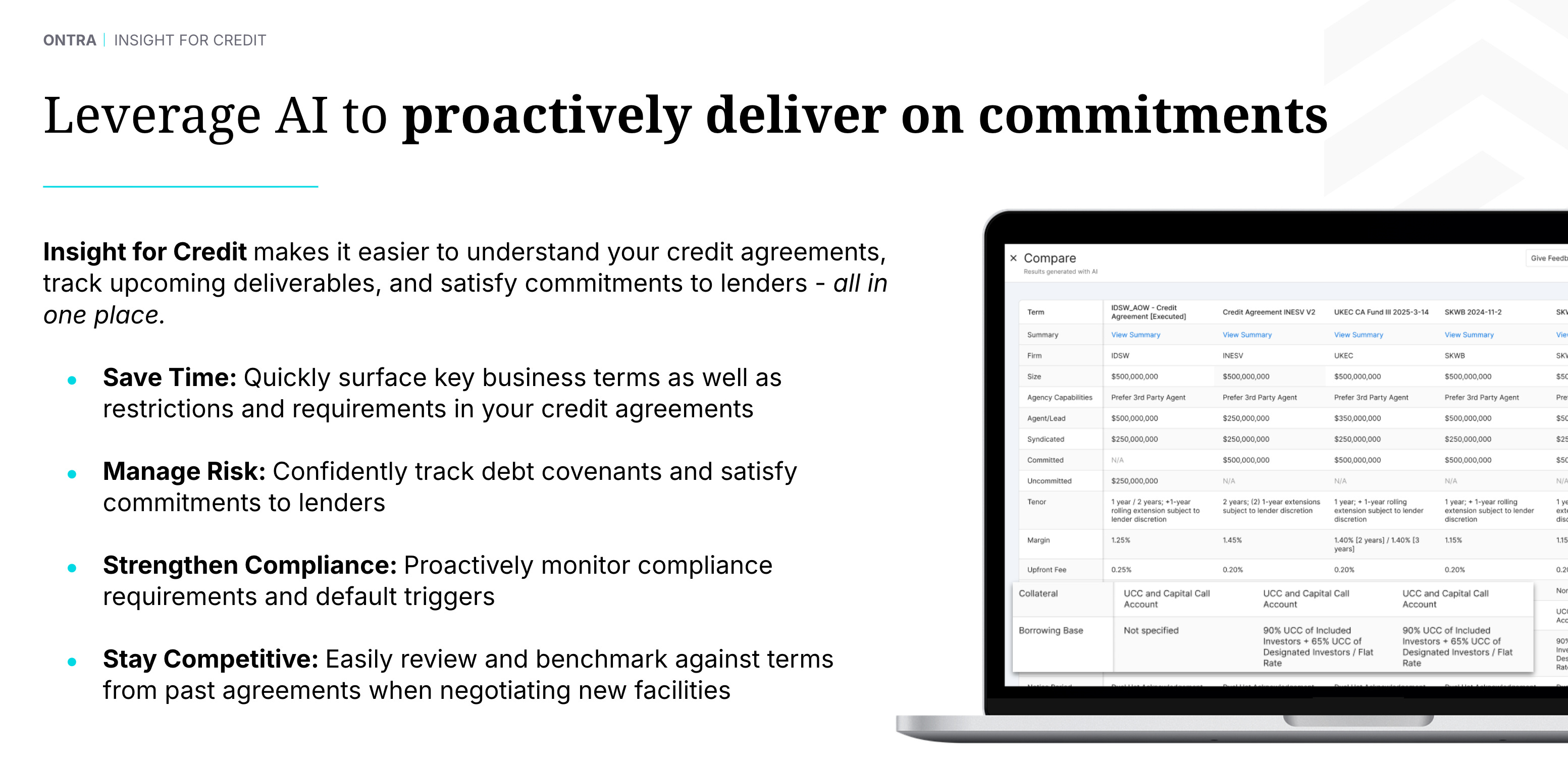
Ontra’s product trajectory is a steady cadence of deep workflow expansion. In the last couple of years, the company has launched multiple new products. Most recently, Ontra introduced a solution that allows firms to upload complex credit agreements, extract key data elements, and enable downstream comparison and workflow execution across counterparties. The theme stays consistent: unstructured documents become structured understanding, which becomes action.
More from Uncovered Media


