


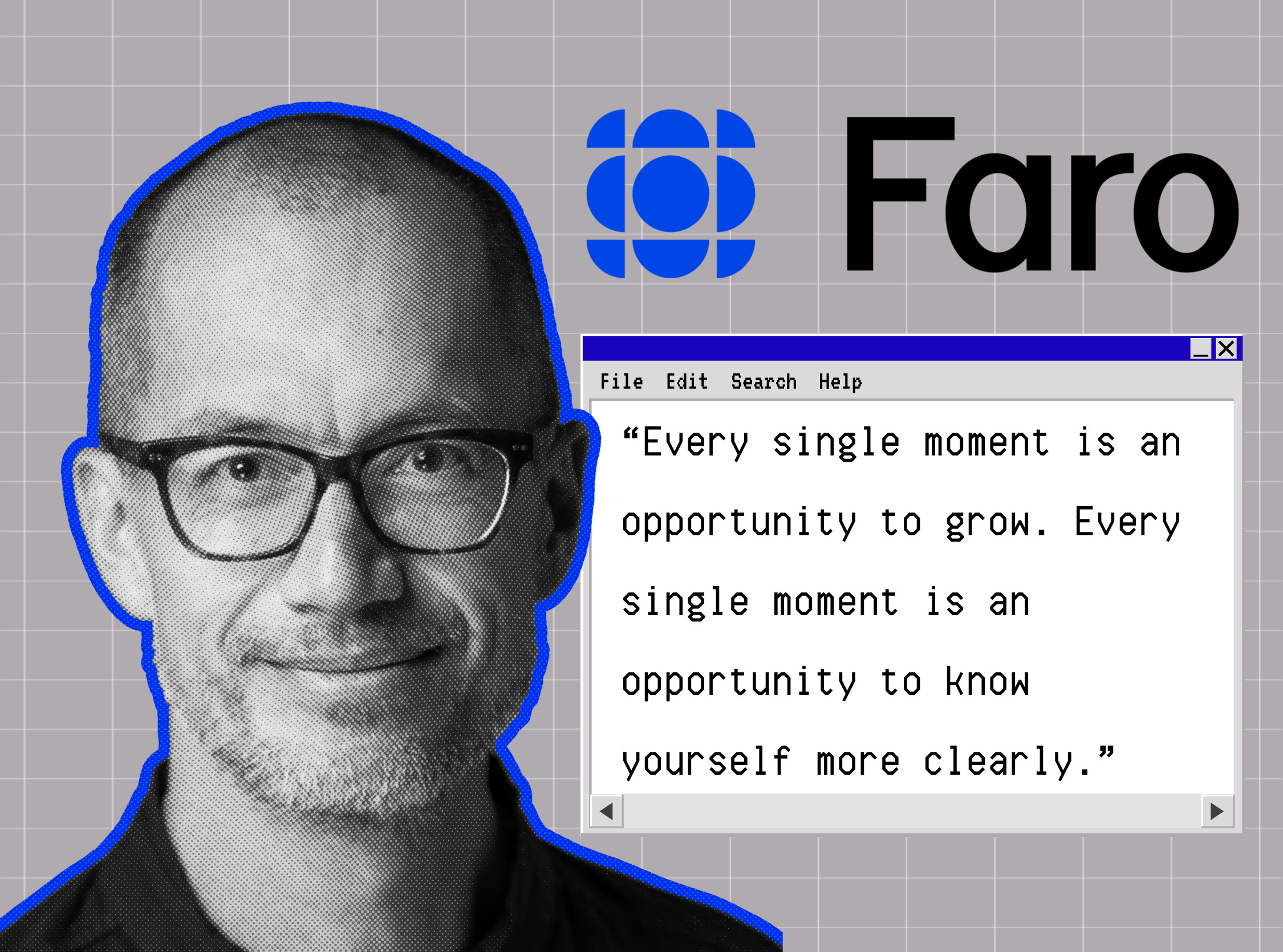
Some of the most expensive decisions in medicine are still made inside Microsoft Word.
That was one of the first things Patrick Leung noticed when he began looking closely at clinical trials. These are not small projects. A single trial can cost hundreds of millions of dollars, run for years, involve thousands of patients, and determine whether a therapy ever reaches the people who need it. And yet the design of that trial, the inclusion criteria, the endpoints, the schedule of activities, the patient burden, the operational feasibility, often still begins as prose in a document.
For Patrick, the absurdity was hard to unsee.
Drug development has spent decades moving in the opposite direction of software. Moore’s Law made computing cheaper. Eroom’s Law, Moore spelled backward, describes the darker pattern in pharmaceuticals: despite more scientific capability, the cost of bringing a new drug to market has climbed over time. Regulatory expectations have increased. Existing therapies have raised the bar for new ones. Trials have become more complex, more global, more expensive, and harder to execute.
The industry has poured in more money and gotten less efficiency out.
Patrick did not come to Faro Health because he had spent his career in pharma. He came because the problem looked like a design failure hiding in plain sight.
Faro is an enterprise SaaS company bringing structured, AI-assisted design to clinical trials. Before Faro, Patrick had seen almost every version of technical scale. He was employee No. 1 at a dot-com startup that went public. He co-founded a company. He worked as an engineer at Google. At Two Sigma, he applied machine learning to private equity and venture. He had built from almost nothing. He had operated inside thousand-person organizations. What he had not done was the one-to-ten stage: the messy middle where a real product has to become an institution.
A close friend, Faro investor and chairman Gary Swart, urged him to take the call. Patrick did. The company was around 40 or 50 people at the time, past the earliest stage but still very much in formation. That alone was interesting. But the deeper pull was personal.
Patrick’s father was, in his active years, Hong Kong’s top cardiothoracic surgeon. Growing up, it was almost assumed Patrick would become a doctor too. He loved biology. His biology teacher begged him to become a scientist. Instead, Patrick chose computer science.
For most of his career, that choice looked final. Faro reopened the door from a different side. Patrick was not entering medicine through the operating room. He was entering through the infrastructure that shapes how new treatments reach patients. It was a way to bring his expertise into his father’s field without becoming his father.
Designing Before Writing
The obvious AI use case in clinical trials is authoring. Clinical protocols are long, technical, repetitive documents. If a model can draft sections faster, it can shave time from the process. Patrick sees the value in that. He also thinks it is not the highest-impact layer.
The real leverage comes earlier.
Before anyone writes the protocol, someone has to design the trial. Who qualifies? Who is excluded? What are the endpoints? How often does a patient need to come in? What procedures are required? How much data does the sponsor need to collect? How much burden can patients actually tolerate? What design gives the drug the best chance of proving its thesis without making the trial impossible to run?
Those decisions have consequences for years. A poor design can lead to amendments, delays, failed enrollment, unnecessary cost, or a trial that answers the wrong question. A single amendment can add months. That is why Patrick is less interested in AI as a faster writing tool and more interested in AI as a better design partner.
But that kind of AI cannot run on vibes.
Faro’s thesis starts with structured data. In other industries, this is almost obvious. Finance, high-tech, and other software-heavy domains have long understood that complex systems need standardized representation. Clinical trials are highly structured by nature, but much of their design still lives in unstructured documents. USDM, the industry’s attempt to standardize clinical trial data, is one effort Patrick respects. Faro CEO Scott sits on its board. But standardization has not yet fully taken hold across the industry.
That gap is where Faro operates.
Patrick has worked in AI for more than a decade, long before the current LLM wave. In machine learning, the old lesson was that the quality of the input data often determines the quality of the system. LLMs changed the interface, but they did not eliminate that truth. A model can summarize a PDF. It can generate text. But if the goal is to help design a trial across cost, safety, efficacy, speed, regulatory feasibility, and patient experience, the model needs more than words. It needs a structured understanding of the thing it is reasoning about.
That is what makes clinical trial design different from creative design.
When most people hear “design,” they think of taste: how something looks, sounds, or feels. Patrick means something closer to engineering. Parametric design. Objective functions. Trade-offs.
A clinical trial is a system with competing goals. You want to minimize cost. You want to minimize time to market. You want to maximize safety. You want to maximize efficacy. You want enough data to satisfy scientists and regulators, but not so much burden that patients cannot participate. The scientists may want to measure everything. The operators may look at the same plan and wonder whether anyone with a job, a family, or a body already under medical stress could realistically sign up.
The work is not to make a protocol prettier. It is to find the balance that can survive science, regulation, operations, and human life at the same time.
What AI Still Needs Humans For
Patrick is not trying to remove people from that process. At Faro, humans are everywhere in the loop.
Clinical experts validate AI outputs. They build golden datasets and truth sets to test accuracy. Customers review what the system produces. Nothing is treated as ready to send to the FDA without expert judgment. In a domain where patient safety and regulatory approval are on the line, any other posture would be reckless.
That view extends beyond clinical trials. Patrick is skeptical of the most extreme claims about AI-driven job collapse. He does not dismiss the fear, but he thinks some predictions reveal what he calls a lack of imagination.
His favorite counterexample is radiology. Years ago, some of the smartest people in AI predicted machine vision would wipe out radiologists. Instead, radiology demand increased. Automation made imaging cheaper and more accessible. More imaging created more need for specialists to interpret it. Technology did not remove the human layer. It changed the economics underneath it.
Patrick expects many fields to follow a similar pattern. AI will automate meaningful work. It will also create new demand, new workflows, and new forms of expertise.
Software engineering is already showing the shape of this shift. Agentic coding tools make it easier for people to build demos, websites, and early prototypes. But the farther a project goes, the faster it runs into the sharp edges of software engineering. Testing, architecture, scale, security, refactoring, maintainability: those do not disappear because code is generated faster. If anything, teams reach those problems sooner.
Patrick does not buy the idea that engineers will simply write specs while AI handles everything underneath. Some tasks are well-bounded enough for that: migrations, refactors, internationalization, operations with clear constraints. But deciding the next product architecture? Understanding how a system will behave as more features, users, and edge cases load onto it? He would not hand that off completely.
His advice to younger engineers is not to chase the safest-sounding job title. It is to go deeper into what genuinely interests them, then learn how to use AI to build meaningful things. Security, developer tooling, AI safety, and systems for coordinating agents all look increasingly important. He even half-joked that AI companies may need a “Chief Philosopher” as ethics becomes a real operating function, not a branding exercise.
It was a joke with a serious point. As AI becomes more powerful, the hard questions become less technical and more human. What should the system optimize for? What values should constrain it? Who decides when efficiency conflicts with ethics?
The Work Is the Practice
Patrick’s interest in those questions did not begin with AI. It runs through his spiritual life too.
He started with karate in college, partly through a fascination with Bruce Lee and partly through a desire to explore dimensions of himself that a traditional British-style education in Auckland had not made room for. Karate introduced him to meditation. In New York, he explored Chinese martial traditions more deeply, including an esoteric form of kung fu. That led to Indian meditation, Ashtanga yoga, Kundalini Tantra, Tibetan Buddhism, and eventually Tai Chi.
He does not treat those practices as separate from work. To Patrick, work is one of the places practice becomes real.
Every interaction is an opportunity to notice a reaction. Why am I stressed? Why did that comment upset me? Why do I doubt this will work? What belief is operating underneath the response? A startup, in that sense, becomes more than a vehicle for building product or creating value. It becomes a place where people confront their own assumptions, fears, ambitions, and limits.
That worldview could sound abstract if Patrick used it to avoid the practical. He does not. He applies it directly to the work of building Faro. Believing that a product can help sponsors design better trials, believing that AI can be used responsibly in a high-stakes medical domain, believing that a startup can survive the distance from one to ten, all of that requires a certain expansion of imagination.
For Patrick, there is no clean separation between technical discipline and inner discipline. A system design review and a Tai Chi form are not the same activity, but they draw from the same source: attention, patience, and the willingness to see what is actually happening.
Running the Model on Civilization
Patrick’s side project sounds, at first, like a departure from Faro. It is not.
His daughter’s research group asked him to contribute to a project, and he chose the question of what might happen with AI. Not as a podcast argument. Not as a doom prediction. As a model.
He pulled together research and views from prominent AI thinkers and built a simulator around several core scenarios: goal divergence between AI and humanity, failures of corrigibility where AI stops listening to human direction, governance breakdowns, and more positive paths where AI accelerates science while humans slow deployment enough to create meaningful oversight.
The output is not utopia or apocalypse. Depending on the assumptions, Patrick sees something closer to 60-40 or 70-30 in favor of good outcomes. Encouraging, but not comfortable. Hopeful, but not naïve.
The point of the simulator is not to declare the future. It is to identify which variables could move the probability distribution. What decisions make good outcomes more likely? What failures make bad outcomes more likely? Where should attention, money, governance, and technical work actually go?
Patrick is a fan of Iain M. Banks’ Culture novels, which imagine a future where advanced AI helps create something closer to techno-utopia than machine domination. He sees the appeal of that vision. But his optimism is conditional. AI will not automatically orient itself toward human flourishing. It has to be designed that way.
That phrase, human flourishing, matters to him. It pulls the conversation out of narrow AI safety and into a larger civilizational question. Humanity’s current trajectory is already troubled: biodiversity loss, extractive economics, declining birth rates, institutional fragility. AI is not arriving into a stable system. It is arriving into one already under strain.
So the question is not only how to prevent AI from harming humanity. It is how to build systems powerful enough, and wise enough, to help life flourish.
That is the same question Patrick is asking at Faro, just at a different scale. In clinical trials, the problem is how to design better systems for bringing medicine to patients. In AI governance, it is how to design better systems for aligning intelligence with life. In work, it is how to design better conditions for growth. In spiritual practice, it is how to notice the hidden patterns shaping the self.
Patrick Leung did not become the doctor everyone expected him to become. But he has spent his career moving toward harder and higher-stakes forms of care. Not care delivered through surgery, but care embedded in systems: how trials are designed, how software is built, how AI is governed, and how human beings learn to see themselves clearly enough to make better decisions.
The setting has changed. The concern has not.