


CTO Uncovered’s View
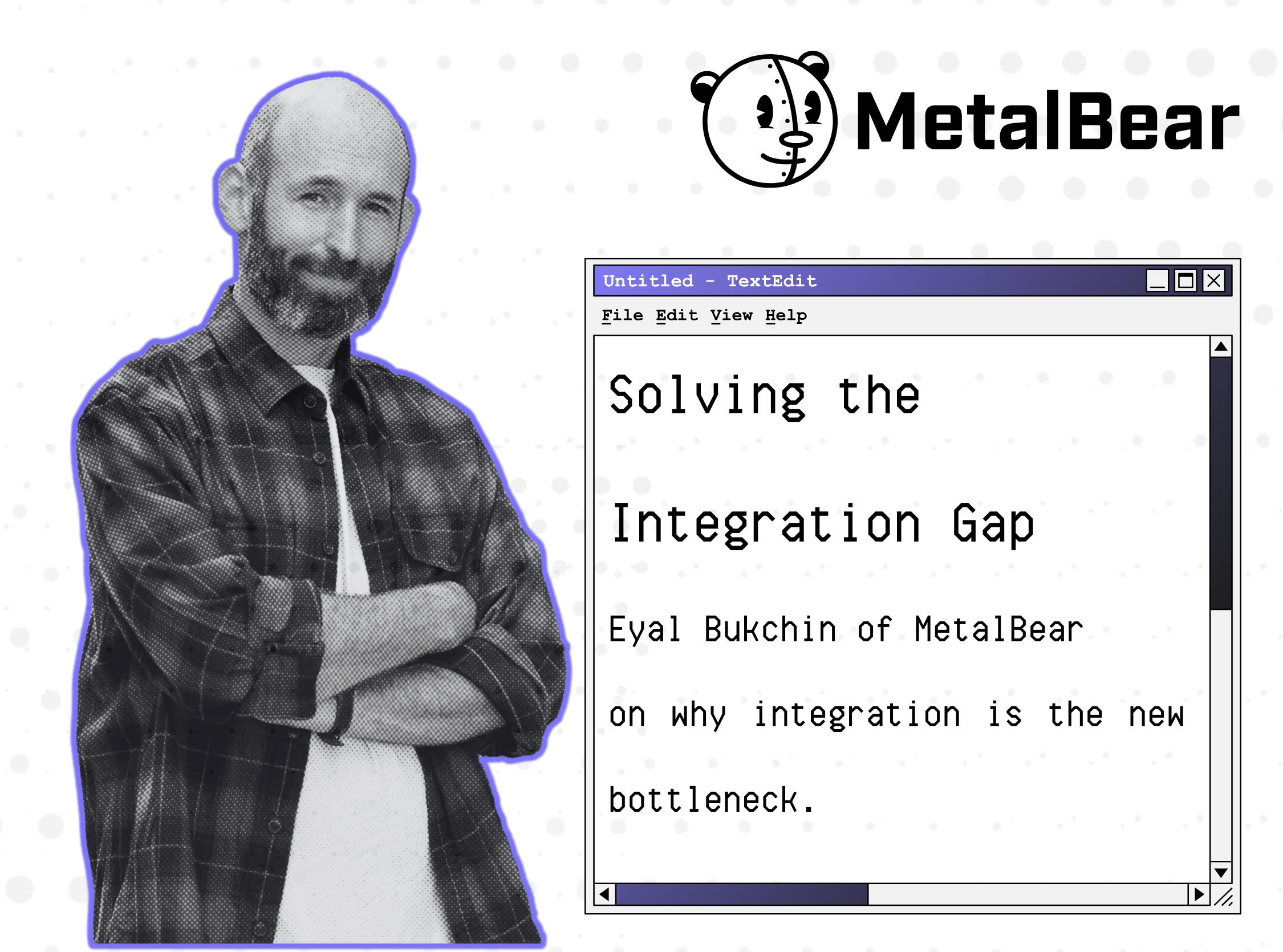
Eyal Bukchin is building for the moment software stops being theoretical. In a world where AI can generate code at an accelerating pace, the new bottleneck is not writing; it is validating. It is integration. It is the painful gap between “it works on my machine” and “it works in a living system with microservices, databases, mature state, and third-party dependencies.”

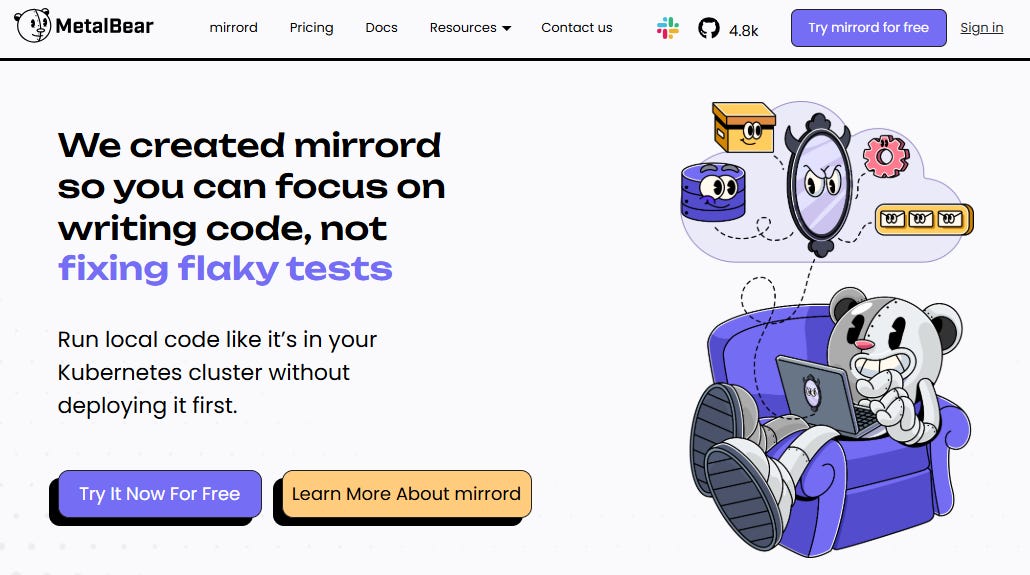
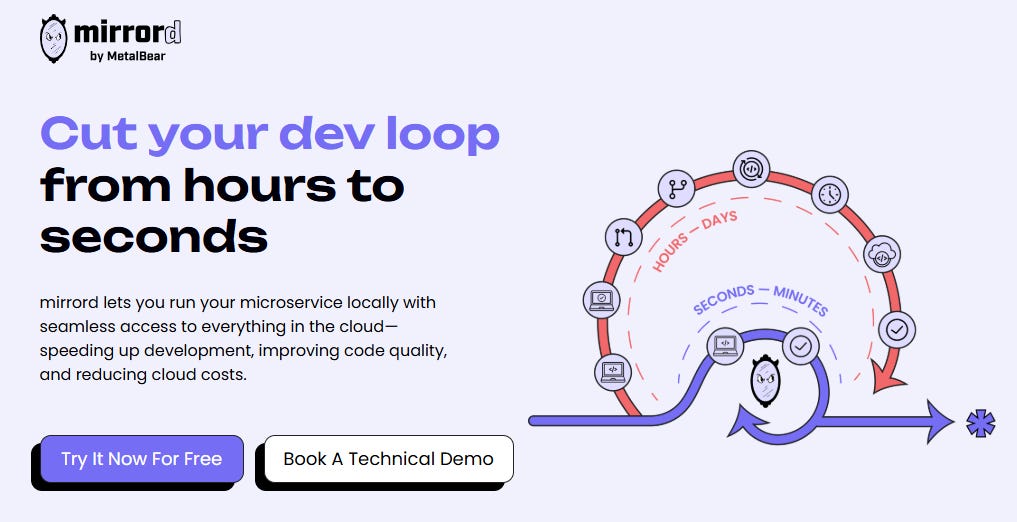
MetalBear exists inside that gap. Eyal and his co-founder did not start with a trendy AI thesis; they started with a developer reality: modern systems are too complex to faithfully replicate locally, and that long iteration cycle means you only discover glaring issues late. Their product, mirrord, pushes integration earlier by letting engineers work locally while wiring their changes into a real remote environment without leaving a disruptive footprint.

Eyal Bukchin's CTO lens is shaped by two forces colliding at once. First, developer tooling has become impossibly crowded; this makes clarity, trust, and brand as important as technical merit. Second, agentic development is changing the shape of the engineering job; the engineer becomes less of a code producer and more of an orchestrator who can think at multiple levels, communicate clearly, and verify what the machines produce. Eyal expects the teams who win will not be the ones who generate the most code; they will be the ones who can safely integrate change at scale.
About MetalBear
MetalBear was founded in April 2022 by two technical co-founders who previously worked together at BioCatch, a fraud detection company serving financial services. Eyal serves as CTO, while his co-founder, Aviram, is CEO and the primary outward-facing leader in the developer community. The company’s flagship product, mirrord, was born from a single recurring frustration: the widening gap between local development and how code behaves in production-like reality, where microservices, mature state, and external dependencies create surprises late in the cycle.
MetalBear’s long-term ambition is bigger than one tool. Eyal describes the original vision as building a “HashiCorp for cloud engineers,” with multiple products that solve day-to-day workflow problems. That is why the company and product brands both exist; “MetalBear” is a pun on “bare metal,” a name they kept because it was memorable, even as their focus narrowed.
Key Takeaways
AI Creates More Code, Not More Certainty: Productivity goes up, but integration and end-to-end validation become the bottleneck.
Sandboxes Have Limits: Personal environments are expensive for humans and even less scalable for agents; they also struggle to simulate real production behavior.
Trust Is a Product Requirement: mirrord asks teams to change how they use staging; brand and credibility matter because the first reaction is fear of breaking shared environments.
The New Engineer Profile: MetalBear is optimizing for adaptable, mature engineers who can operate at multiple levels and communicate clearly, especially in a remote and agent-assisted world.
Meet Eyal Bukchin
The Journey to the CTO Seat: Eyal co-founded MetalBear after years of building inside real systems where late-stage integration failures were routine. He and his co-founder did not begin with a single “burning” startup idea; they started by inventorying the recurring pain points they had lived through as developers, and testing in real-world context kept surfacing as the most stubborn one.
Co-Founder Role Design: Eyal is direct that titles matter. His co-founder is CEO largely because he is better positioned to be the face of the company: faster with customers, more active in the community, and more outward-facing by nature. Eyal describes himself as more critical. Even so, the boundaries are fluid; Eyal manages marketing, an unusual ownership area for a CTO, which reflects how intertwined product narrative and technical trust are for MetalBear.
Techno-Optimist, Cautious Team: Eyal believes a human-less world is not an unreasonable assumption given the speed of AI progress. His team has been more skeptical; they adopted AI tools more slowly than many peers, driven by early experiences that felt noisy and time-wasting. Eyal did not mandate adoption; he created conditions for learning, including an internal channel to share wins and patterns that were successful.
Deep Dive: Workflow & Adoption
mirrord exists because local development no longer resembles real systems. As architectures become more distributed and dependent on external services, the gap between a developer’s laptop and a production-like environment keeps widening. Eyal’s framing is simple: developers love the fast feedback loop of local development, but they need to test in real context earlier because the surprises that appear at the end of the cycle are the most costly.
The irony is that while everyone feels this pain, very few people know how to name the solution. Eyal says the market does not struggle to understand the problem; it struggles to categorize. Developers are not searching for “run my local code connected to my remote environment;” they search for broad buckets like productivity, cloud environments, or dev infrastructure. mirrord lives between those categories, which makes storytelling and live demonstration a requirement, not a nice-to-have.
That is why trust sits at the center of mirrord’s adoption curve. The product asks teams to relax one of their most hard-earned instincts: protect staging at all costs. If multiple developers can work against a shared environment concurrently, the default fear is predictable; someone will break it, contaminate results, or create chaos no one can untangle. mirrord is not just introducing a new tool; it is asking for a new operating model.
MetalBear earns that trust by reducing the perceived risk and increasing the felt reliability. They meet engineers where skepticism lives, walking through how concurrency is controlled, how changes avoid leaving a footprint, and what guardrails exist when things go wrong. Just as importantly, they prove they are real: a team that shows up, answers questions directly, and can point to customers using the workflow in practice. Over time, trust compounds through repeatable outcomes, clear explanations, and the confidence that the system will behave the same way tomorrow as it did today.
The Future Tech Stack & Workforce
Eyal does not believe MetalBear is building for a human-less world right now. They are building for a world where agents become prevalent and humans shift into the role of orchestrators, directing multiple loops of work at once while still owning the judgment calls that keep systems safe. In that future, mirrord does not need to be reinvented so much as fortified. Eyal sees the product as foundational and flexible enough to carry forward; however, the operating conditions around it will change fast.
As agents proliferate, the same workflow patterns that are manageable for teams of humans become intense at scale. Concurrency stops being an edge case and becomes the default; more work streams will run against shared environments, and the system has to support higher parallelism without turning staging into chaos or making results impossible to trust. At the same time, the risk profile changes. When execution is increasingly automated, the cost of unwanted behavior rises; “good enough” protections are no longer sufficient. Guardrails have to become stronger and more explicit to prevent accidental damage to shared clusters, not because developers are careless, but because the volume and velocity of changes make the blast radius bigger.
That shift in product reality also reshapes how Eyal thinks about building a team. He is clear about what he is optimizing for today: adaptability and independence. MetalBear is not hiring junior engineers right now, and he is not sure when they will. The reason is not a lack of belief in developing talent, but the demands of the moment. In a world where tooling, norms, and best practices are in constant motion, he wants engineers with the professional maturity to choose the right tools, learn quickly, and solve problems without relying on fixed playbooks.
Challenges for Upcoming CTOs
The speed of change makes it difficult to predict what remains relevant in a standard engineering curriculum. Eyal expects parts of today’s educational path to become less applicable, but he also believes the goal is clear even if the path is not: become the person who can leverage agentic tools better than everyone else, not by prompting, but by thinking clearly about problems and verifying outcomes.
He also calls out a subtle but crucial skill that is about to become a louder differentiator: communication. Engineering is collaborative; remote engineering is written; agentic engineering is instruction. If the primary interface becomes language, then the ability to express intent clearly and precisely becomes a core technical advantage, not a soft skill.
Looking Ahead
MetalBear’s bet is that the industry is about to feel the cost of “more code” more acutely than the benefit. Integration testing and end-to-end validation become the choke points, especially if the default solution is expensive sandboxes that still fail to behave like production.
Eyal’s posture is optimistic about where AI is headed, but disciplined about what has to be true for the future to work. The teams that win will be the ones who can operate at multiple altitudes: define the problem at the business level, instruct systems at a high level, and verify details at the implementation level. In that world, speed is not a function of generating code faster; it is a function of making real systems safe enough for machines and humans to build together.
More from Uncovered Media


